What Can and Cannot Be Frozen: Complete Food Freezing Guide
Published Date:
The freezer is arguably the most powerful tool in your kitchen when it comes to preserving food, saving money, and dramatically reducing household food waste. Yet, for many home cooks, the freezer remains a mysterious icebox. We often toss leftovers into it with the vague hope that they will emerge perfectly preserved, only to be disappointed months later by a block of unrecognizable, freezer-burned mush.
The truth is, while the freezer acts like a magical pause button on food spoilage, not all foods are created equal when exposed to sub-zero temperatures. Freezing fundamentally changes the cellular structure of food. The water inside the food expands as it turns into ice crystals, which can rupture cell walls. When thawed, this can drastically alter the texture, color, and sometimes even the flavor of your ingredients.
Understanding what can and cannot be frozen is the key to unlocking the full potential of your kitchen. By knowing exactly how to prepare, package, and thaw different types of food, you can stretch your grocery budget, enjoy seasonal produce year-round, and make your weekly meal planning on a budget incredibly efficient. Let’s dive into the ultimate guide to freezing food.
The Science of Freezing Food
To master the freezer, you need to understand a little bit of the science behind it. When food freezes, the water molecules within it crystallize. The slower the freezing process, the larger these ice crystals become. Large ice crystals are the enemy of food texture; they puncture the delicate cell walls of fruits, vegetables, and meats.
When you eventually thaw the food, these punctured cells leak their internal fluids. This is why a previously crisp strawberry turns into a soggy, watery mess after being frozen and thawed. Therefore, the goal of freezing is to freeze food as quickly as possible to keep the ice crystals small. You can aid this process by spreading food out in a thin layer before freezing, rather than freezing it in one massive block.
Additionally, oxygen is the other major enemy in the freezer. When frozen food is exposed to the dry, cold air of the freezer, the moisture on the surface of the food sublimates (turns directly from ice into vapor). This causes dehydration and oxidation, leading to the dreaded “freezer burn”—those tough, dry, grayish-brown patches on your food. Proper packaging that completely blocks out air is non-negotiable for long-term storage.
Foods That Freeze Beautifully
You might be surprised by just how many everyday items freeze perfectly, retaining their flavor and texture remarkably well.
Meat and Poultry: Almost all raw meat and poultry freeze exceptionally well. The key is to remove them from their flimsy supermarket packaging and rewrap them tightly in freezer paper, heavy-duty foil, or a vacuum-sealed bag to prevent freezer burn. Cooked meats also freeze well, though they are best stored in sauces or gravies to retain moisture.
Butter and Cheese: Butter freezes brilliantly; you can stock up during sales and store it in the freezer for up to six months. Hard and semi-hard cheeses like cheddar, parmesan, and gouda also freeze well. However, freezing cheese can make it slightly crumbly, so previously frozen cheese is best used for cooking, melting, or grating rather than on a charcuterie board.
Breads and Baked Goods: Bread is one of the best candidates for freezing. In fact, if you find yourself constantly dealing with stale bread, check out our guide on stale bread waste solutions. Slicing a loaf before freezing allows you to pop individual slices straight into the toaster. Muffins, cookies, and even unfrosted cakes freeze wonderfully when wrapped tightly.
Soups, Stews, and Broths: Liquid-based meals are freezer champions. Because they are already soft or liquid, you don’t have to worry about cellular damage ruining their texture. Always leave an inch of space at the top of your container, as liquids expand when frozen.
Foods That Do Not Freeze Well
Unfortunately, the freezer isn’t a miracle worker for everything. Certain foods will be completely ruined by the freezing and thawing process.
High-Water-Content Produce: Vegetables and fruits with a very high water content should never be frozen if you intend to eat them raw. This includes lettuce, cucumbers, celery, radishes, watermelon, and raw tomatoes. The ice crystals will completely destroy their crisp texture, turning them into a mushy puddle upon thawing. (Note: You can freeze tomatoes if you plan to cook them into a sauce later).
Dairy Products with High Moisture: While hard cheeses freeze well, soft dairy products generally do not. Sour cream, yogurt, cream cheese, and cottage cheese will separate, curdle, and become grainy when frozen and thawed. Milk can be frozen, but it will also separate and requires vigorous shaking after thawing, making it better suited for cooking than drinking.
Fried Foods: If you want to maintain the crispy, crunchy exterior of fried chicken or french fries, do not put them in the freezer. The moisture migrates during freezing, and when thawed and reheated, the breading will become soggy and unappetizing.
Cooked Pasta and Rice: While technically safe to freeze, plain cooked pasta and rice often become mushy and lose their structural integrity when thawed, especially if they were fully cooked before freezing. If you must freeze them, slightly undercook them (al dente) first.
How to Prevent Freezer Burn
Freezer burn doesn’t make food unsafe to eat, but it severely degrades the quality, texture, and flavor, often leading to food waste. Preventing it comes down to minimizing the food’s exposure to air.
- Invest in Proper Containers: Ditch the thin sandwich bags and flimsy takeout containers. Use thick, heavy-duty freezer bags, vacuum sealer bags, or airtight glass/plastic containers specifically designed for freezing.
- Squeeze Out the Air: If using bags, squeeze out as much air as humanly possible before sealing. You can use the “water displacement method” by partially submerging the unsealed bag in a bowl of water, which pushes the air out, and then sealing it just above the water line.
- Wrap Tightly: For meats and baked goods, a double-wrap strategy works best. Wrap the item tightly in plastic wrap or freezer paper first, and then place it inside a heavy-duty freezer bag or wrap it again in aluminum foil.
- Cool Before Freezing: Never put hot food directly into the freezer. It raises the internal temperature of the freezer, partially thawing surrounding items, and creates excess condensation inside the container, which turns into large ice crystals.
Essential Freezing Tips and Tricks
Flash Freezing: This is a game-changer for fruits, vegetables, and individual portions. Spread berries, sliced bananas, or meatballs in a single layer on a baking sheet lined with parchment paper. Place the sheet in the freezer until the items are solid (usually 1-2 hours). Then, transfer them to a freezer bag. This prevents them from clumping together into a giant block, allowing you to grab only what you need.
Portion Control: Always freeze food in the portions you actually plan to eat. If you freeze a gallon of chili in one massive container, you will have to thaw the entire gallon just to eat one bowl. Freeze in single-serve or family-size portions to make mealtime a breeze.
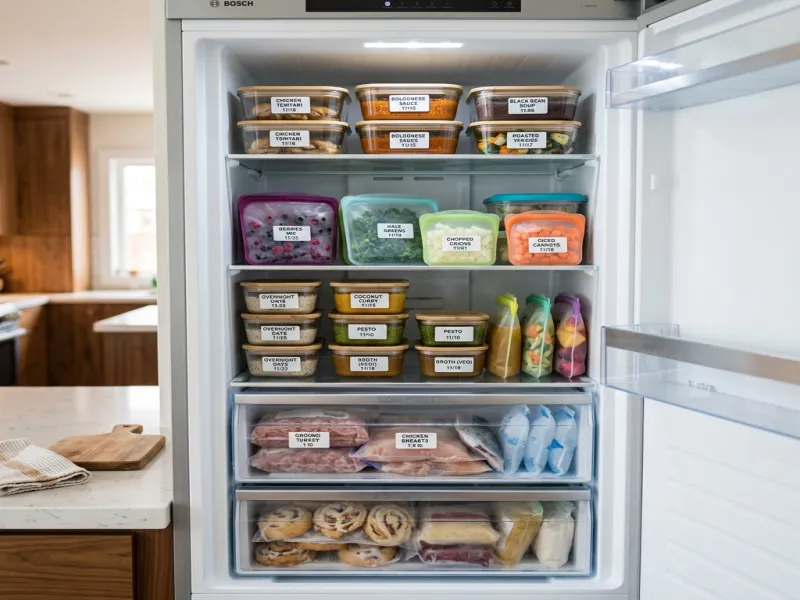
Label Everything: You might think you will remember what that mysterious red block of sauce is three months from now, but you won’t. Keep a permanent marker and masking tape near your freezer. Label every single item with the contents and the date it was frozen. Practice “First In, First Out” (FIFO) to ensure older items get used before newer ones.
Frequently Asked Questions
Can you refreeze food that has been thawed?
It depends on how it was thawed. If raw meat was thawed safely in the refrigerator, it can technically be refrozen without cooking, though there will be a significant loss of quality and moisture. If food was thawed on the counter or in the microwave, it must be cooked immediately and cannot be refrozen raw. You can, however, cook raw thawed food and then freeze the cooked dish.
How long does food last in the freezer?
From a safety standpoint, food stored constantly at 0°F (-18°C) will always be safe to eat. However, the quality (taste and texture) degrades over time. Ground meats are best used within 3-4 months, whole poultry within a year, and soups/stews within 2-3 months.
Why do some foods get freezer burn faster than others?
Foods with higher moisture content or those that are irregularly shaped (making it hard to wrap them tightly without air pockets) are more susceptible to freezer burn. Meats and poultry are particularly prone to it if not wrapped properly because of the moisture on their surface.
Is it safe to freeze food in glass jars?
Yes, but you must be careful. Liquids expand when frozen, which can shatter the glass. Always use straight-sided (wide-mouth) jars, and leave at least an inch or two of “headspace” at the top to allow for expansion. Cool the liquid completely in the fridge before moving the jar to the freezer.
Can I freeze fresh herbs?
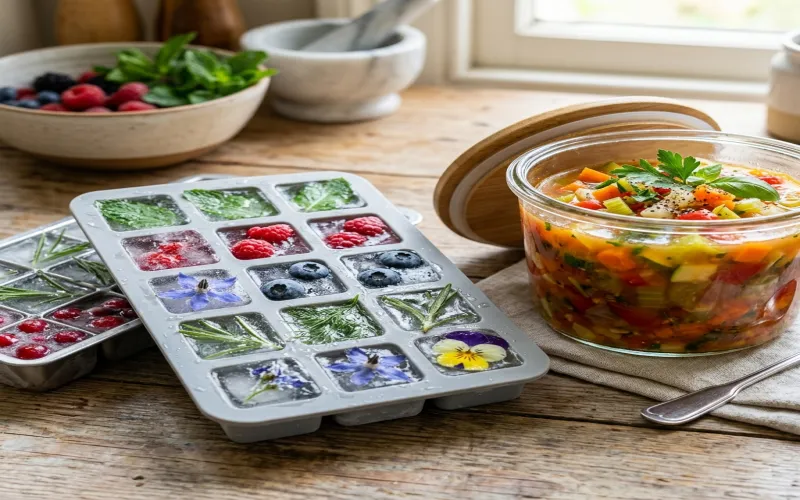
Yes! While they will lose their crispness and shouldn’t be used as a fresh garnish, frozen herbs are perfect for cooking. You can chop them up, place them in an ice cube tray, cover them with water or olive oil, and freeze. Pop out an herb cube whenever you’re making a soup, stew, or sauce.
Ready to conquer your kitchen, save money, and completely eliminate food waste? Download the Tarif app today to track your freezer inventory, get recipe suggestions based on what you already have, and access personalized, zero-waste meal plans. Get Tarif App Now